
Understanding pharmaceutical-grade water standards
Pharmaceutical-grade water comes in several distinct grades, each with specific quality attributes and permitted uses. From WFI, Purified Water, or water used in production, these waters must meet requirements defined by the United States Pharmacopeia (USP), European Pharmacopoeia (EP/Ph. Eur.), and Japanese Pharmacopoeia (JP). To guarantee purity and safety, compendial monographs mandate critical tests for waters, particularly Total Organic Carbon (TOC) (USP <643>), Water Conductivity (USP <645>), Bacterial Endotoxins and Microbial Enumeration/Microbial Limits. While offline compendial testing in the laboratory plays a crucial role, manufacturers no longer rely solely on this data for decision making and process control. Instead, real-time, online monitoring of water purity provides continuous in-process data to support the industry’s drive toward Process Analytical Technology (PAT).
Why comprehensive water quality monitoring matters
Effective water monitoring programs provide comprehensive compendial testing and analysis to detect contamination and verify system performance, all while maintaining compliance for reporting to regulatory authorities. Unlike other pharmaceutical ingredients, pharmaceutical waters are generally produced by continuous processes and used in manufacturing soon after generation, likely before traditional, definitive microbial test results are available. Rigorous water system validation and quantitative monitoring against established alert and action levels provide early indication of system control. These early indicators are critical for detecting an approaching quality shift.
Whether you're validating pharmaceutical-grade water system operations, conducting routine quality control testing against official compendia specifications, or troubleshooting process deviations, accurate and reliable analytical methods are the foundation for protecting products, processes, and above all, patients. By adhering to rigorous standards for water for pharmaceutical purposes, including those outlined in USP, EP, and JP pharmacopeias, your facility ensures that every batch meets the stringent requirements necessary for safe and effective drug manufacturing.
A comprehensive and quantitative understanding of your water system is at the heart of quality monitoring for life sciences. In regulated industries where patient safety is paramount, robust water quality assurance programs are essential for sustainable operations and regulatory success. From formulation and manufacturing to cleaning and sterilization, water quality directly impacts product integrity, process reliability, and patient safety.
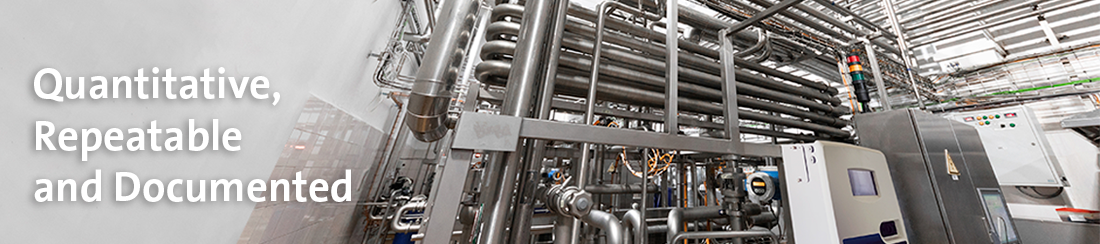
Regulatory Compliance
cGMP & Quality by Design
Contamination Control
Real-Time Testing
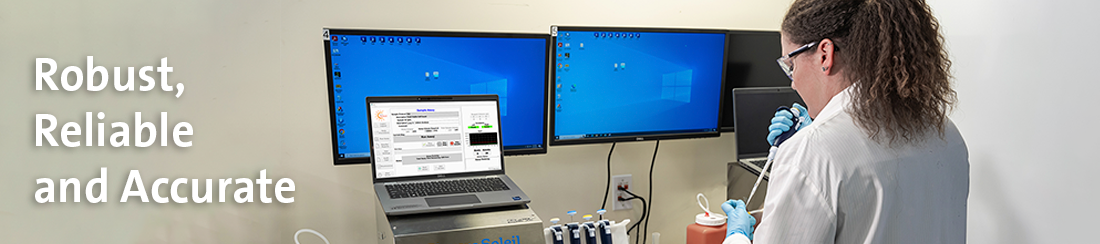
A comprehensive and quantitative understanding of your water system is at the heart of quality assurance
Life science manufacturers seek simplified and reliable analytical testing while maintaining compliance. As a world-leading provider of analytical instruments, Veolia transforms complex measurements into simple and reliable processes with the Sievers portfolio.
Sievers instruments measure TOC, conductivity, endotoxins, and bioburden to support your process monitoring and cleaning validation as part of compendial water testing compliance. By enabling real-time testing, automation, process control, and risk mitigation, you can drive efficiency without compromising accuracy or compliance.
Facilities worldwide trust Sievers Instruments, software, consumables, services and expertise to make critical testing easier, faster, and compliant—so you can focus on what matters most: your production.
- TOC, Conductivity and Chemical Testing
-
Total organic carbon (TOC) analysis serves as a fundamental indirect measurement of organic molecules present in water systems, as mandated by compendial testing outlined in USP <643>. This non-specific analysis quantifies organic compounds through CO2 formation. These organic contaminants can interfere with pharmaceutical processes and compromise product purity. More importantly, carbon-based molecules act as a food source for microorganisms, making TOC control a vital step in mitigating microbial growth and reducing contamination risk.
Conductivity testing quantifies a water sample’s electrical conductivity to assess dissolved ionic impurities. Using a staged testing process of increasing complexity, this temperature-specific measurement is detailed in USP <645>. The shift to TOC and conductivity testing served as a reliable and convenient alternative to older wet chemistry methods, crucially providing the immediate, continuous feedback required for process control and quality assurance.
Sievers M500 Online Analyzer
Features simultaneous TOC & conductivity, automated calibration & validation, 21 CFR Part 11 & FDA data integrity
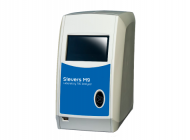
Sievers M9 Lab
Simultaneous TOC and conductivity for pharmaceutical water, WFI, cleaning validation, diagnostics ...
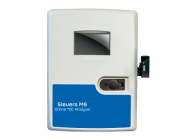
Sievers M9 Online Analyzer
Real-time monitoring for pharmaceutical water systems and water for injection, with autoreagent and more...
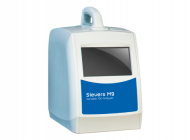
Sievers M9 Portable
At-line monitoring of pharmaceutical water systems, at-line cleaning validation, simultaneous TOC and conductivity
- Rapid Microbial Detection - Bacterial Endotoxin and Bioburden Testing
-
Bacterial endotoxin testing (BET) detects lipopolysaccharides shed by gram-negative bacteria. Even in trace amounts, these pyrogens can cause dangerous, severe reactions in patients, making endotoxin testing a critical safety parameter in pharmaceutical water systems. Traditional endotoxin assays require approximately 2-3 hours for setup and final results, positioning this test as higher risk than TOC or conductivity monitoring due to longer result times and increased contamination threat.
Today, endotoxin testing has evolved significantly. Innovative technologies now provide the simplicity, speed, and robustness necessary to reduce risks, supporting real-time decision-making while maintaining the accuracy required for patient safety compliance.
Bioburden testing measures the total number of viable organisms present in water systems, ensuring systems aren't harboring potentially harmful bacteria or other microbes that could continuously shed contamination into the water stream and contaminate products. Traditional plate-based culture methods represent a high risk category, requiring 48 to 72 hours (and sometimes up to 5 to 7 days) for microbial growth and enumeration. Because pharmaceutical waters are produced continuously and used in manufacturing soon after generation, the water is likely used well before these definitive test results are available. This extended delay prevents proactive management, potentially allowing a contamination event to persist and spread.
With the push for quantitative data suitable for real-time process control, recent advances in biological monitoring prioritize a drastic reduction in time-to-results while maintaining compendial accuracy and reliability.
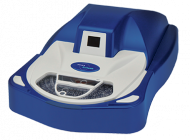
Sievers Eclipse BET Platform
The innovative Sievers Eclipse automated endotoxin detection platform decreases assay setup time by up to 85% and reduces Limulus Amebocyte Lysate (LAL) reagent use by up to 90%
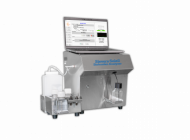
Sievers Soleil Rapid Bioburden Analyzer
What if you could get your bioburden results in 45 minutes of less? when you're waiting days for bioburden results, there's a lot at risk. But with rapid microbial testing ...