Veolia Water Technologies & Solutions

Total Organic Carbon (TOC) Analysis

Water quality compliance concerns and process upsets need to be detected quickly and accurately so you can make confident decisions and take action. 

Total organic carbon (TOC) monitoring is an analytical method for measuring levels of carbon-based compounds or contaminants in water. It is commonly used to ensure adherence to water quality standards and for process monitoring across industries such as pharmaceuticals, microelectronics, food & beverage, chemical processing, municipal, and more.

TOC monitoring provides rapid, sensitive, and comprehensive detection of organic compounds, making it an indispensable tool for quality control, regulatory compliance, process optimization, and asset protection. By delivering actionable data in the lab or via continuous, real-time monitoring, a powerful TOC program enables you to achieve compliance, detect and prevent contamination, reduce water use, and provide insights for process control and troubleshooting.

Total Organic Carbon (TOC) Analysis

Water quality compliance concerns and process upsets need to be detected quickly and accurately so you can make confident decisions and take action. 

Total organic carbon (TOC) monitoring is an analytical method for measuring levels of carbon-based compounds or contaminants in water. It is commonly used to ensure adherence to water quality standards and for process monitoring across industries such as pharmaceuticals, microelectronics, food & beverage, chemical processing, municipal, and more.

TOC monitoring provides rapid, sensitive, and comprehensive detection of organic compounds, making it an indispensable tool for quality control, regulatory compliance, process optimization, and asset protection. By delivering actionable data in the lab or via continuous, real-time monitoring, a powerful TOC program enables you to achieve compliance, detect and prevent contamination, reduce water use, and provide insights for process control and troubleshooting.

Accurate TOC results to support your specific industry regulations and application needs
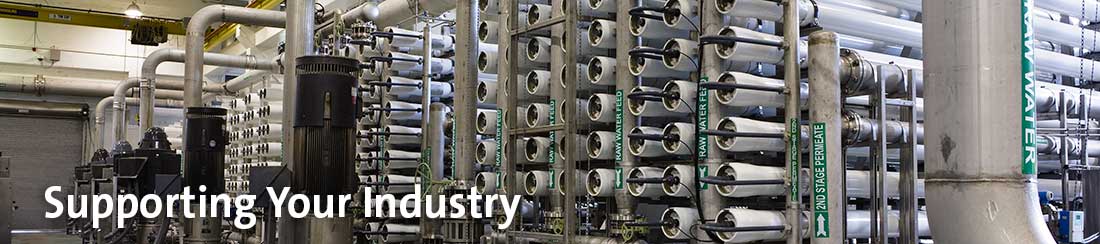
Header_indutstries

Total organic carbon (TOC) analysis is a measurement that provides insights into water quality and process control. It provides a fast, accurate, and effective way to gauge the purity of water used in processes as well as the water taken from and returned to the environment. TOC analysis with Sievers Instruments covers a dynamic analytical range from 0.03 ppb for microelectronics manufacturing up to 50,000 ppm for industrial process and wastewater. Be it pharmaceutical grade water monitoring and compliance testing, or process and contamination control, industries that rely on TOC monitoring have a consistent need – the need for accurate, fast, and reliable results.

Regulatory compliance

Pharmacopoeia compliance, data integrity, and audit readiness

Regulatory bodies like the FDA and pharmacopeias (USP, EP, JP) dictate that pharmaceutical waters must meet strict purity standards and quality specifications to be fit for use. To maintain a validated state of control, facilities must continuously monitor core quality attributes. This requires comprehensive testing of Total Organic Carbon (TOC) and Water Conductivity to detect organic and ionic impurities. Additionally, quantitative microbial enumeration ensures systems maintain microbiological control, while Bacterial Endotoxins Testing (BET) is a strict regulatory requirement for critical grades like WFI.

While meeting these specifications is the first step, proving compliance relies on data integrity. Maintaining data integrity is fundamental for regulatory compliance and audit readiness. Ensuring all data collected is in alignment with ALCOA+ (attributable, legible, contemporaneous, original, and accurate) principles and 21 CFR Part 11 requirements provides a complete, tamper-proof audit trail of all water quality measurements.

By automating data capture through PAT integration, facilities eliminate manual transcription errors and secure a continuous audit trail. Incorporating automated documentation alongside comprehensive trending analysis allows manufacturers to quickly respond to regulatory inquiries, demonstrating robust system control and providing evidence of consistent compliance with pharmacopeial requirements and critical water quality parameters.

Compliance Data Integrity


Current Good Manufacturing Practices (cGMP)

Future-proof design, monitoring, and control of facility water systems

Current Good Manufacturing Practices (cGMP) establish a baseline set of requirements for water system design, operation, and monitoring. Under cGMP, facilities must establish and monitor appropriate specifications based on the water's intended use. However, as the FDA explicitly notes, "testing alone is not adequate to ensure quality." Instead, quality must be built into the design and manufacturing process at every step.

Modern cGMP also encourages a proactive approach that goes beyond minimum compliance and traditional testing. The "C" in cGMP stands for "current," requiring companies to use technologies and systems that are up-to-date to drive continual improvement. This means acknowledging that older systems or monitoring methods may be less than adequate by today's standards. For example, regulatory guidance such as USP <1223> and EP Chapter 5.1.6 outline steps to evaluate, select, and qualify alternative microbiological methods. While classical culture methods can take 48 to 72 hours (or longer) to yield results, the adoption of advanced instrumental approaches and Rapid Microbial Methods (RMM) provides a shorter lead time for obtaining results. This faster detection of microbial contamination enables more timely corrective actions and improved process control.

Implementing continuous monitoring systems, automated controls, and data analytics allows facilities to establish and track validated alert and action levels. According to FDA guidelines, these limits must be based on validation data and set low enough to signal significant changes from normal operating conditions. Continuous data trending against these levels serves as an early warning system, signaling a potentially approaching quality shift before the water system deviates out of control. By adopting these forward-thinking technologies, a facility positions itself to adapt to changing regulatory landscapes, demonstrating a commitment to quality and patient safety that aligns with modern pharmaceutical manufacturing principles.

Resources:

Contamination and Impurities Monitoring

Contamination control and impurities monitoring

In regulated industries where patient safety is paramount, robust water quality assurance programs are essential for sustainable operations and regulatory success. From formulation and manufacturing to cleaning and sterilization, water quality directly impacts product integrity, process reliability, and patient safety.

Water systems are inherently vulnerable to both exogenous (external) and endogenous (internal) contamination that can compromise operations. While feed water introduces initial organic, inorganic, and particulate risks, the distribution system itself presents ongoing vulnerabilities. The most significant microbial threat is the development of biofilms – adaptive microbial communities that attach to pipes, valves, and tanks, continuously shedding free-floating bacteria into the water stream. For critical grades like Water for Injection (WFI), these biofilms can also release bacterial endotoxins, which pose severe patient safety risks if not properly controlled and detected.

Even trace levels of these contaminants can have cascading effects throughout manufacturing processes. To mitigate this risk, continuous, online monitoring is essential. Total organic carbon (TOC) testing serves as a critical indirect measure of organic compounds, detecting everything from source water contaminants to organic leachables and biofilm byproducts. Simultaneously, conductivity monitoring detects extraneous inorganic ions, providing an immediate measure of chemical purity.

Without quantitative microbial enumeration and continuous chemical monitoring, contamination can easily go undetected. By aggressively monitoring for these impurities, facilities can prevent minor process deviations from turning into costly production delays, equipment damage, product recalls, or regulatory violations.

Resources and Case Studies Cleaning Validation


Reduce risk and workload with streamlined solutions for compendial water monitoring

The Sievers range of instruments comprises a comprehensive portfolio that span the complete spectrum of compendial water quality testing requirements. Founded on pioneering TOC and conductivity monitoring, Sievers instruments have grown to provide advanced solutions for critical endotoxin and bioburden testing. Our solutions are designed to verify critical quality attributes and meet strict USP, EP, and JP pharmacopeial standards with precision and reliability.

Choosing an instrument manufacturer with a comprehensive portfolio empowers facilities with a single, trusted source for water quality testing, significantly reducing vendor complexity. Our expertise ensures consistent compliance across testing parameters by supporting rigorous validation and qualification processes (IQ, OQ, and PQ). We provide integrated support and service from a team of experts who deeply understand the complex water testing landscape. By choosing Sievers products for your compendial testing needs, you gain more than instrumentation – you gain a team that supports your pharmaceutical water quality management and maintaining your systems in a validated state of control.

Real-Time Monitoring and Process Control

Fast results enable continuous process control

Real-time release testing (RTRT) is transformative to a facility and has become the new industry standard. Instant data enables manufacturers to spot trends faster and obtain immediate system performance feedback.

By utilizing online instrumentation for critical attributes like TOC and conductivity, facilities can generate continuous in-process data. This instant data acts as an early warning system, enabling system engineers to spot trends and respond to alert and action levels to prevent potential out-of-specification (OOS) events before they happen. This level of control leads to drastically reduced waste, delays, and risk.

With cleaning validation, traditional approaches to cleaning procedures often create operational inefficiencies due to their manual nature. This turns into delays in equipment release and impacts production schedules. Manufacturers are now utilizing real-time monitoring technologies and integrated water quality testing solutions that streamline cleaning validation protocols while ensuring regulatory compliance.

Process analytical technology is the future of compendial water testing

Modern process analytical technology (PAT) extends beyond point-of-use water testing to encompass integrated data management, automated process control, and intelligent water system monitoring. The shift to continuous, online testing generates a high volume of valuable in-process data. PAT implementation in compendial water testing can overhaul how manufacturers document, monitor and manage pharmaceutical water quality in real-time.

PAT integration, combined with real-time water testing and automated process control systems, enables manufacturers to optimize and automate continuous monitoring and compliance of water systems. This approach helps maintain the highest standards of pharmaceutical water quality and patient safety. Additionally, a PAT-driven strategy aligns with regulatory expectations for process control, providing undeniable, data-driven understanding for water system management.

Resources:

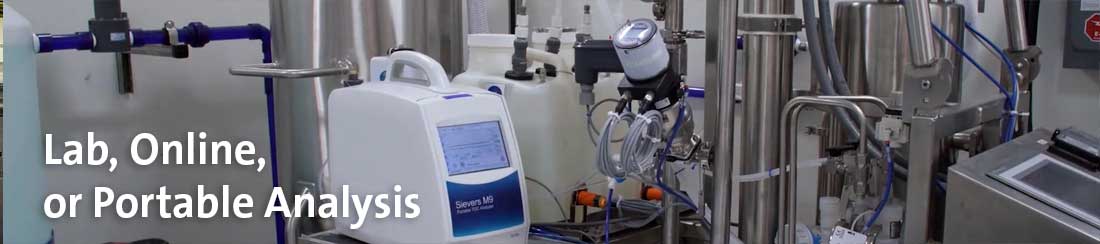
Header_labonline

Laboratory

Achieve reliable analytical results and boost productivity with dedicated laboratory TOC instruments.

Perfect tools to boost efficiency for compliance testing, quality control, and detailed sample analysis.

The Sievers portfolio of lab TOC instruments supports various sample matrices and concentrations and includes analyzers engineered for specific industry needs:

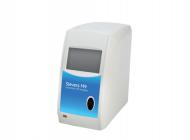
For pharmaceuticals, the Sievers M9 delivers:

  • Simultaneous TOC and Stage 1 conductivity testing for USP <643> and <645> compliance
  • Adherence to global regulations including USP <643>, USP <645>, EP 2.2.44, IP 2.4.30, CP Appendix VIII R, and JP <2.59>
  • Comprehensive data management, including full compliance support for 21 CFR Part 11 and data integrity

Support for cleaning validation applications.
sievers-checkpoint

Sievers M9 Lab

Simultaneous TOC and Conductivity for pharmaceutical water, WFI, cleaning validation, diagnostics…


For drinking water and environmental monitoring, the Sievers M5310 C provides:

  • Minimal maintenance requirements and user-friendly operation
  • Support for disinfection byproducts rule (DBPR) compliance
  • Data-driven insights for treatment optimization
sievers-checkpoint

Sievers M5310 C Lab

EPA compliance TOC monitoring, drinking water, environmental water quality, municipal, and process water…


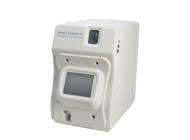
For wastewater and challenging industrial applications, the Sievers InnovOx features:

  • Wide dynamic operating range up to 50,000 ppm
  • Patented Supercritical Water Oxidation for superior TOC recovery
  • Reliable performance for biological wastewater plant optimization and high salt/brine monitoring
sievers-checkpoint

Sievers InnovOx Lab

Robust sample handling for industrial wastewater, biological treatment, process control, brine, condensate return, and reuse/reclaim…

Portable Monitoring and At-Line Testing

Bring the lab to your sampling point, gain process understanding where you need it with portable TOC analyzers

Ideal for multi-point sampling, troubleshooting, and rapid process analysis. These versatile TOC monitoring solutions enable quick decision-making and immediate response to water quality or process changes, helping reduce downtime and optimize operational efficiency.

Process understanding through at-line monitoring has become essential across industries, as demonstrated by the pharmaceutical industry's Process Analytical Technology (PAT) framework. This risk-based approach to achieving optimal quality and efficiency has become a standard in the pharmaceutical industry - as well as many other industries - for maintaining consistent product quality and maximizing operational performance.

Sievers portable TOC instruments are deployed at-line (or close to a process stream) across various applications:

  • Compliance testing
  • Cleaning validation
  • Troubleshooting
  • Process control
  • Continuous monitoring applications

At-line TOC analysis provides essential insights into system performance, water treatment, and process optimization. Using Sievers TOC Analyzers, operators across multiple industries can make immediate, data-driven decisions through quantitative measurements for:

High-Purity Water Systems (Pharmaceuticals & Microelectronics)

  • Maintain strict water quality standards
  • Reduce system risks and downtime
  • Support compliance testing

Industrial & Municipal Water Applications (Food & Beverage, Chemical Processing, Water Treatment)

  • Optimize wastewater treatment
  • Monitor utility and process water
  • Improve operational efficiency

Manufacturing Equipment Cleaning (All Industries)

  • Validate cleaning procedures
  • Improve cleaning process understanding
  • Generate results within minutes
  • Minimize equipment hold times


sievers

Sievers M9 Portable

At-line monitoring of pharmaceutical water systems, at-line cleaning validation, simultaneous TOC and conductivity…

sievers

Sievers M9e Portable

Microelectronics UPW loop monitoring, reclaim, reverse osmosis, troubleshooting, low-level TOC…

sievers

Sievers M5310 C Portable

Troubleshooting and portable monitoring, EPA compliance, reuse/reclaim, system optimization…
sievers-2

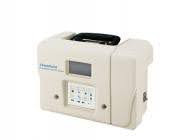
Sievers CheckPoint TOC Sensor

Portable TOC sensor for rapid diagnostic sampling and troubleshooting of UPW systems…

Online / Continuous Monitoring

Real-time TOC analysis delivers seamless surveillance of critical processes, enabling immediate response to excursions and ensuring consistent product quality

Exceptional continuous monitoring tools. Online TOC monitoring has become essential across diverse industries, from pharmaceuticals and microelectronics to chemical processing and food & beverage. While known as Process Analytical Technology (PAT) in pharmaceutical applications, the benefits of continuous monitoring are universal. The real-time data stream enables:

  • Rapid detection of process deviations
  • Regulatory compliance
  • Efficient validation of cleaning procedures
  • Optimization of treatment processes
  • Implementation of predictive maintenance strategies
  • Support for real-time release testing (RTRT)

For wastewater applications, continuous TOC monitoring enables rapid detection of influent variations and real-time process control, helping facilities optimize treatment efficiency and ensure discharge compliance.

By detecting out-of-trend (OOT) or out-of-specification (OOS) results instantly, continuous TOC monitoring empowers operators to take immediate preventative and corrective actions, ensuring optimal process control and product quality.

Pharmaceutical & Biotech Applications

Compared to traditional lab-based testing, Sievers online TOC and conductivity monitoring systems provide:

  • True real-time release (RTRT / RTT) of ultrapure water (UPW)
  • Automated compliance with USP <643> and <645> requirements
  • Elimination of laboratory bottlenecks
  • Significantly reduced release times 
  • Enhanced operational efficiency
  • Immediate detection of system excursions
  • Online cleaning validation, verification, and monitoring
 

sievers-m500

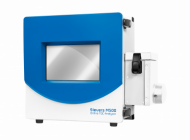
Sievers M500 Online Analyzer

Pharmaceutical water real-time release testing (RTRT), 21 CFR Part 11, data integrity, process analytical technology…
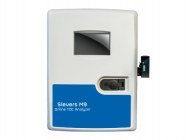
sievers

Sievers M9 Online Analyzer

Real-time monitoring for pharmaceutical water systems, TOC and conductivity compliance testing, process monitoring…

Microelectronics High-Purity Water Applications

In semiconductor manufacturing, where water quality directly impacts yield, continuous TOC monitoring provides critical surveillance with:

  • Continuous monitoring throughout the make-up water system — from the feed water to the final point of use
  • Immediate detection of low-level contamination at sub-ppb levels
  • Ultra-fast response time for reclaim stream monitoring
  • Real-time alerts for immediate excursion response
  • Protection of critical manufacturing processes
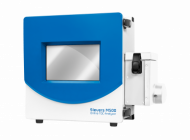
sievers-m9online

Sievers M500e TOC Analyzer

Microelectronics applications, online UPW monitoring, low-level detection, process monitoring...
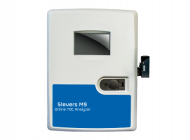
sievers-m9eonline

Sievers M9e Online Analyzer

Ultra-low TOC monitoring for microelectronics, high sensitivity and accuracy…

Industrial & Municipal Water Applications (Food & Beverage, Chemical Processing, Water Treatment)

Real-time TOC analysis optimizes process water, utility water, and wastewater operations through:

  • Rapid detection of influent variations
  • Optimization of treatment processes
  • Continuous discharge compliance monitoring
  • Early warning of process upsets
  • Reduced operational costs through process optimization
  • Protection of downstream equipment and processes
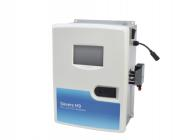
sievers-m5310

Sievers M5310 C Online Analyzer

Continuous monitoring, dual-stream capabilities for environmental, municipal & industrial applications…
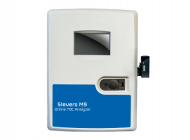
sievers

Sievers M9 Online Analyzer

Real-time monitoring for pharmaceutical water systems, TOC and conductivity compliance testing, process monitoring…
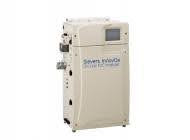
sievers-1

Sievers InnovOx Online Analyzer

Industrial process monitoring, robust sample handling, dynamic range up to 50,000 ppm for brine and wastewater…
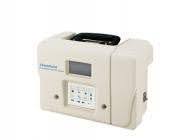
sievers-checkpoint

Sievers CheckPoint TOC Sensor

Portable TOC sensor for rapid diagnostic sampling and troubleshooting of UPW systems…

Manufacturing Equipment Cleaning (All Industries)

Accelerate clean-in-place (CIP) processes and cleaning validation applications with:

  • Real-time CIP cleanliness verification
  • Equipment release time reduction from days to minutes
  • Process optimization
  • Reduced water consumption opportunities
  • Immediate detection of cleaning process deviations
sievers

Sievers M9 Online Analyzer

Real-time monitoring for pharmaceutical water systems, TOC and conductivity compliance testing, process monitoring…

What makes Sievers TOC analysis better? Membrane Conductometric Technology

Your complete TOC partner: End-to-end monitoring solutions and support

TOC monitoring is about more than just instruments. Veolia and its Sievers Instruments team are your complete partner for monitoring, process optimization, and real-time release testing. Our comprehensive support includes:


Technical Expertise:

  • Risk-based monitoring strategy development
  • Method development and implementation
  • Out-of-specification (OOS) troubleshooting
  • Process optimization guidance

Validation & Compliance:

  • Pharmaceutical-specific validation protocol development
  • Data integrity assurance
  • Regulatory compliance support

Ongoing Support:

  • Preventive maintenance programs
  • Technical service and training
  • Software and system updates